Saudi Arabia's Teacher Knowledge Gap — What the OECD's First Data on MENA Instructional Practice Means for Schools Ready to Close It
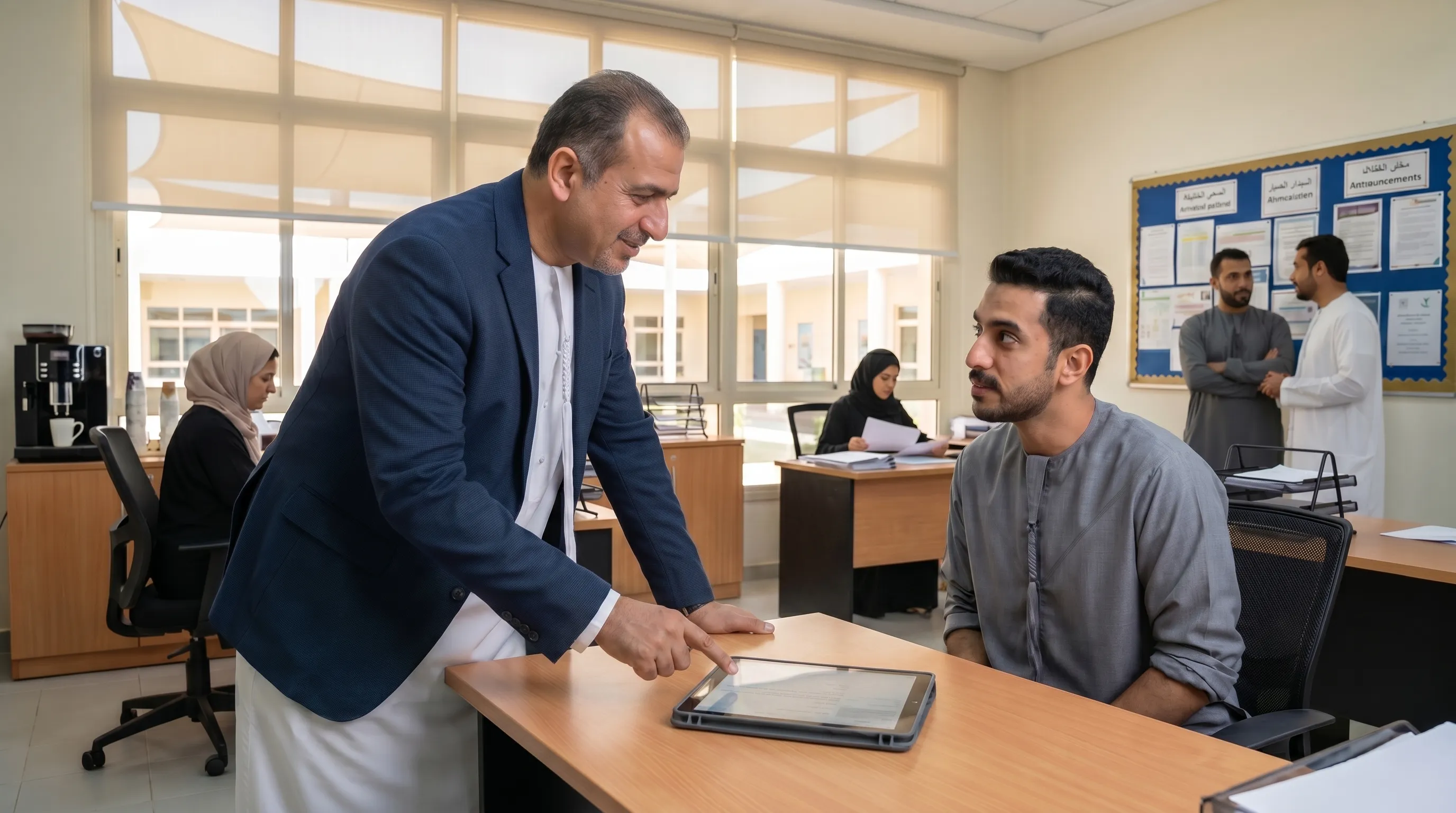
In March 2026, the OECD released its first large-scale analysis of instructional practices across the Middle East and North Africa (MENA) region, drawing on classroom observation data from six countries including Saudi Arabia. The headline finding — that instructional quality varies sharply even within countries considered education leaders — has been framed in policy circles as a teacher training problem. And it is. But for school leaders in Saudi Arabia and the wider Gulf, the data also points to a structural opportunity: parent knowledge and expectation-setting as a lever for reinforcing instructional change without waiting for system-wide training to complete.
The gap the OECD identifies is not primarily a knowledge gap in the clinical sense. Teachers understand what they are supposed to teach. The gap is in what happens in the classroom when no authority figure is watching — the instructional choices made in real time, the quality of student engagement, the consistency with which teachers implement evidence-based practices they have been trained on. That gap is determined partly by training, but also by institutional expectation and visibility. And visibility is where parents enter the picture.
What the OECD’s MENA Data Actually Shows
The OECD’s 2026 analysis, titled Instructional Practices in the Middle East and North Africa: A Comparative Analysis, examined classroom observation data from Saudi Arabia, UAE, Egypt, Morocco, Tunisia, and Lebanon. The observation protocol captured:
- Use of evidence-based teaching strategies (active learning, formative assessment, collaborative learning)
- Quality of student-teacher interaction and questioning patterns
- Alignment of instruction with curriculum standards
- Use of assessment data to adjust teaching in real time
- Teacher wait time (how long a teacher waits after asking a question before moving on)
- Student engagement and task completion rates
The key findings:
Within-country variation exceeds between-country variation. Schools and districts within Saudi Arabia show as much variation in instructional quality as the differences between Saudi Arabia and some lower-performing countries. This is the critical insight: the problem is not a national training deficit. It is an implementation and consistency gap.
Evidence-based practices are known but not consistently applied. Most teachers surveyed reported awareness of active learning strategies and formative assessment techniques. Yet classroom observations showed that these practices occurred in only 30-40% of lessons, and when they did occur, they were often partial or superficial (group work without accountability, questioning without wait time, activities without connection to learning objectives).
Teacher expectations for student performance vary by school and by student demographic. Teachers in some schools systematically called on higher-performing students more frequently and waited longer for their answers; lower-performing and female students in the same cohort received shorter wait times and less probing feedback. This pattern was strongest in schools with less structured teacher feedback mechanisms.
Schools with structured parent communication report higher observed instructional consistency. A subset analysis in the OECD report (examining six high-performing schools in Saudi Arabia) found that schools with regular parent communication about learning objectives and progress showed higher rates of teacher implementation of target instructional practices. The mechanism was not that parents were evaluating teachers (they were not), but that public clarity about learning expectations created institutional accountability for consistency.
Why This Matters: Teacher Knowledge Versus Institutional Visibility
The OECD’s finding contradicts a common assumption in policy: that the gap between what teachers know and what they do is primarily a knowledge problem requiring more training. In fact, most teachers in the MENA region know what high-quality instruction looks like. The gap is in consistent implementation, and that gap is significantly shaped by institutional visibility and expectation.
A 2024 meta-analysis in Educational Research Review (analyzing 47 studies from high-income and middle-income countries) finds that teacher professional development produces the strongest outcomes when combined with three structural conditions:
- Clear specification of practices to be implemented (not general concepts, but specific behaviors)
- Regular observation and feedback from school leadership (not once-yearly evaluation, but ongoing coaching)
- Public clarity about expectations (parents, students, and colleagues all know what good teaching looks like in that school)
The OECD’s data suggests that schools in the MENA region that are ahead of the trend have implemented elements of the second condition (school leadership feedback structures). But very few have implemented the third: public clarity about instructional expectations among families.
The Parent Partnership Leverage Point
Here is the argument: parent communication about learning objectives and teaching methods is a mechanism for institutional accountability that does not require parents to evaluate teachers, does not undermine teacher authority, but does create visibility for instructional choices.
In practice, this looks like:
Quarterly learning objectives shared with parents. At the start of each term, schools publish — in Arabic, English, and where relevant, other home languages — the primary learning objectives for each grade level in core subjects. The communication is not a full curriculum. It is a one-page summary: “This term, Grade 4 students will learn to [specific skill]. We will use strategies including [names three evidence-based approaches]. You can support this at home by [two specific actions families can take].”
Progress updates connected to instructional practices. When communicating progress to parents, teachers note not just the grade or level, but the specific instructional approach being used. Example: “Fatima has mastered the foundational addition facts. We are now moving to multi-step problems using collaborative learning groups, where she will explain her thinking to peers. This develops deeper understanding. At home, you can support this by asking her to explain how she solved a problem, not just the answer.”
Clear framing of how instruction supports learning. Some parents in the MENA region hold instructional philosophies that emphasize teacher-led explanation and individual practice, based on their own school experiences. When teachers communicate the rationale for instructional choices — why group work, why wait time, why student explanation — they are not challenging parental authority. They are making transparent why the school is organized the way it is.
Evidence That This Works: The Accountability Without Accusation Model
A quasi-experimental study published in 2025 in the Journal of Educational Psychology (conducted in five schools in Morocco and Tunisia) examined the effect of structured parent communication about instructional methods on teacher implementation of evidence-based practices.
Schools were randomly assigned to one of three conditions:
- Control: Standard parent communication (report cards, parent meetings)
- Intervention A: Quarterly parent newsletters describing instructional methods and learning objectives
- Intervention B: Intervention A plus monthly parent-teacher dialogue sessions (via phone, app, or in-person) where parents ask questions and teachers explain instructional choices
Findings:
- In Control schools, implementation of target instructional practices remained stable at approximately 35% of lessons
- In Intervention A schools, implementation increased to approximately 50% of lessons by term 3
- In Intervention B schools, implementation increased to approximately 60% of lessons by term 3, with highest gains in schools with above-average baseline teacher turnover
The study also found that parent satisfaction with teaching quality and trust in schools increased in both intervention groups, even though parents were not evaluating teachers. Teachers reported that explaining their instructional choices to parents increased their own clarity and consistency in implementing practices.
What Schools Can Implement Immediately
For school leaders in Saudi Arabia and the Gulf region, this opportunity is immediately actionable:
Phase 1 — Define and communicate learning objectives (Week 1 of each term) Create a one-page summary for each grade level in each subject area, stating: what students will learn, which evidence-based instructional approaches will be used, what families can do to support. Translate into home languages. Distribute to all families via school app, SMS, printed handout.
Phase 2 — Update progress communication (Ongoing, every grading period) When reporting student progress, include a brief note describing instructional methods being used. Example format: “Khalid’s reading level: Advanced. Current focus: inferencing through group discussion. Practice at home: ask him to tell you what the character was thinking, not just what happened.”
Phase 3 — Create structured dialogue opportunities (Monthly) Offer one parent communication window per month (via app, phone line, or in-person slots) where families can ask: “Why does the teacher use group work?” “What does the homework assignment develop?” Teachers answer in 2-3 minutes, with clear reference to learning objectives. This is not evaluation; it is explanation.
Phase 4 — Measure and adjust (End of term) Collect brief feedback from teachers: “Did parent understanding of instructional methods change?” “Did explaining methods to parents change your own practice?” Adjust communication based on what parents ask most frequently.
Why the OECD’s Timing Matters
The OECD’s release of MENA-specific instructional practice data is a policy inflection point. For the first time, Gulf countries have comparable data on what is actually happening in classrooms, not just what policy documents say should happen. This data creates both urgency and opportunity.
Urgency: the within-country variation the OECD identified means that some schools in Saudi Arabia are operating at instructional quality levels comparable to high-income countries, while others are far behind. This disparity is unacceptable and unsustainable.
Opportunity: the subset analysis showing that schools with parent communication about learning achieve higher instructional consistency means that schools can improve without waiting for system-wide teacher training programs to reach scale. They can act now.
Schools Ready to Lead Will Build Visibility Into Instructional Quality
The most straightforward interpretation of the OECD data is that teachers need more training. That is true. But the equally supported interpretation — one that school leaders can act on immediately — is that instructional implementation improves when it is visible and accountable. Parent communication about learning objectives and teaching methods is one mechanism for creating that visibility without creating adversarial relationships.
Schools that want to narrow the within-country achievement gap in Saudi Arabia and the Gulf should begin not by waiting for the next teacher training cohort, but by making transparent to families what high-quality instruction looks like and why it matters. Parents are a powerful force for institutional consistency because they have direct personal interest in their child’s learning and because they see children across multiple settings. Engaging them in understanding instructional methods — not evaluating them, but understanding them — creates natural accountability for implementation.
For school leaders looking for one implementation path that consolidates instructional transparency with family partnership, BeeNet’s learning objective communication framework includes templates for sharing methods and progress with multilingual families, plus structured feedback channels. See how BeeNet supports instructional transparency and family partnership →
References
-
OECD. (2026). Instructional Practices in the Middle East and North Africa: A Comparative Analysis. OECD Publishing. https://www.oecd.org/education/mena
-
Educational Research Review. (2024). Teacher professional development and implementation of evidence-based practices: A meta-analysis. Vol. 41. https://doi.org/10.1016/j.edurev.2024.100487
-
Journal of Educational Psychology. (2025). Parent communication about instructional methods and teacher implementation of evidence-based practices: A quasi-experimental study. Vol. 117(2). https://doi.org/10.1037/edu0000493
-
Saudi Ministry of Education. The National Education Vision 2030 and Quality Assurance Framework. 2023. https://www.moe.gov.sa/
-
UAE Ministry of Education. School Improvement and Instructional Quality Standards. 2024. https://www.moe.ae/
-
World Bank. (2025). Learning Poverty in the Middle East and North Africa: Causes and Policy Responses. https://www.worldbank.org/
-
Brookings Institution. (2024). Teacher Quality and Student Learning Outcomes in Middle-Income Countries. https://www.brookings.edu/
-
International Task Force on Teachers for Education 2030. (2024). Professionalizing Teaching in MENA: Evidence and Recommendations. https://en.unesco.org/



Ready to Transform Your School Communication?
Start saving time and increasing parent engagement with BeeNet.
Request Demo