French Children Feel Unheard at School: What the 2026 UNICEF Observatory Report Demands of School Administrators
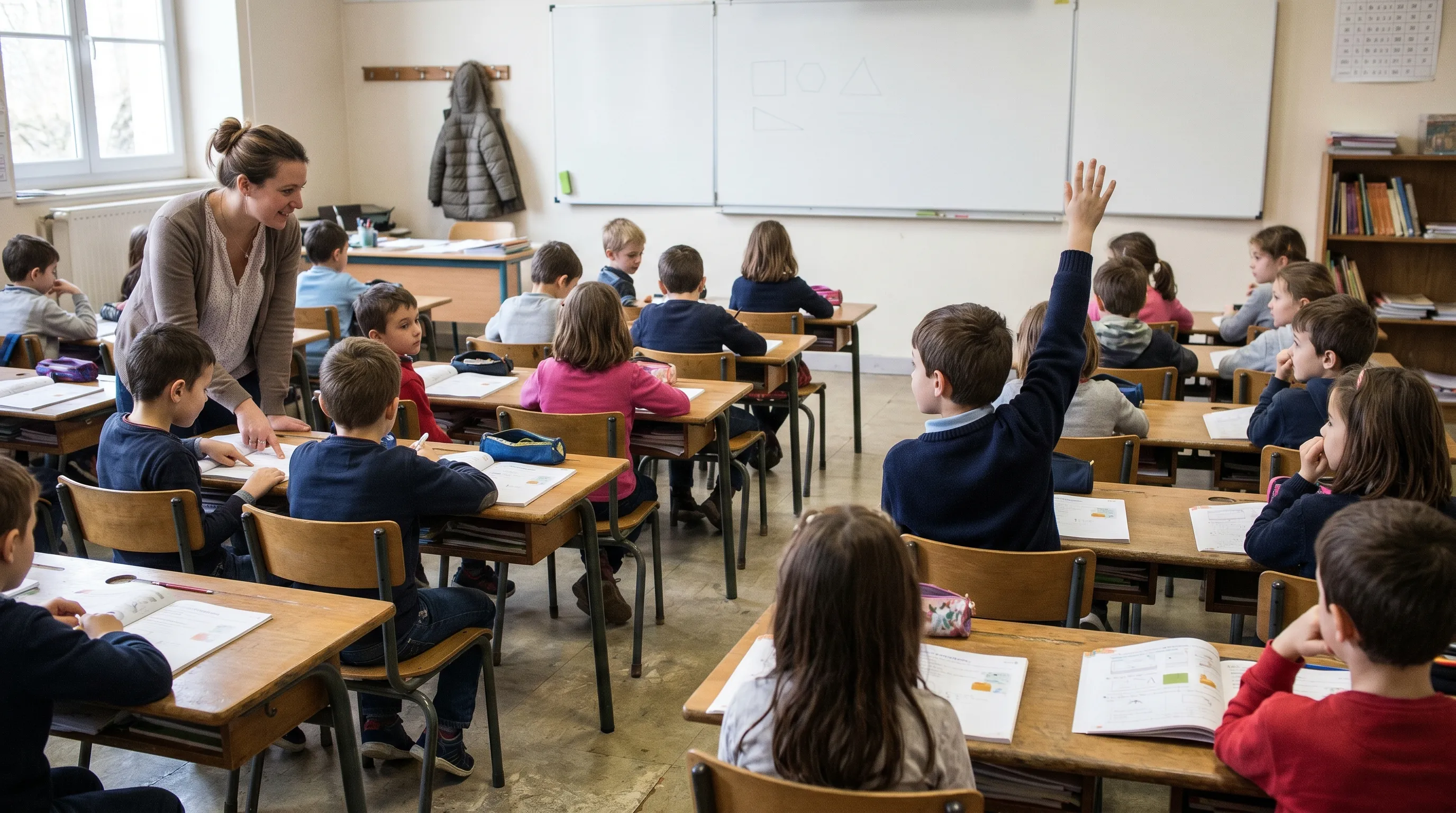
Fewer than one in four French children between the ages of 6 and 18 feel that adults truly listen to them. That figure comes from UNICEF France’s inaugural Observatoire des droits de l’enfant, published in January 2026 — the first national system to centralize data on children’s rights in France.
Only 74.6% of children feel heard at school by adults — approximately 11 percentage points below the rate at home. And when UNICEF asked whether children feel genuinely heard overall, across all domains of their lives, the figure collapsed to 24.7%.
For school administrators, this is not a sociological curiosity. It is an operational signal.
What the Report Actually Found
The Observatoire is France’s first national system that, in the words of EnJeux Enfance & Jeunesse, “centralizes, structures and analyzes data on children’s rights.” UNICEF surveyed children aged 6–18 and found that the majority feel insufficiently heard by adults — not just in school, but across family, municipality, and national political contexts.
The school gap is particularly instructive. Home is the environment children most control; school is the institution most controlled by adults. An 11-percentage-point gap between the two is, in part, a proxy for how institutions communicate.
The report also documents the scale of educational inequality underlying this context: France’s socioeconomic background accounts for 20% of performance variance — higher than the OECD average of 15%, according to the UNICEF France report. The same report documents a mathematics achievement gap of 113 points between advantaged and disadvantaged students — a figure also highlighted by the civil society organization ADAGES in its analysis of the Observatory findings.
The extremes are visible in Mayotte, where 8 in 10 children live in poverty and 58% experience reading difficulties. But the listening deficit appears across the whole country, not only in the most deprived territories.
UNICEF’s operational recommendation: train professionals in contact with children and anchor a durable culture of listening and participation throughout the school system.
From Broadcasting to Dialogue: What the Evidence Shows
France’s education system has an institutional communication pattern where the school sends information outward to families. Parents receive bulletins, newsletters, and formal grade reports. They are notified. They are rarely invited to respond in ways the school actually acts on.
A 2025 peer-reviewed study across seven German schools — covering 944 students, 28 teachers, and 352 parents — found that in lower socioeconomic neighborhoods, what mattered for student school belonging was not how often parents contacted the school, but whether teacher-to-family contact involved a genuine exchange of information. The authors concluded that “home-to-school contact is particularly fruitful if it involves a bidirectional exchange of information between parents and teachers.” Parental contact frequency alone had no significant effect. The quality and direction of the exchange were associated with better outcomes.
The same study found that multilingual families received significantly less teacher contact than monolingual families (F(1)=22.79, p<0.001). In France, where immigrant-background students are concentrated in many disadvantaged school contexts, the research implication is that bidirectional communication efforts may need to specifically target families for whom language creates an additional barrier.
On the student side, a 2025 study published in the Journal of Educational Change surveying 1,751 students found that students with even a single teacher who practiced student voice — actively creating space for students to be heard and demonstrating willingness to respond — showed measurably better outcomes: higher GPA, improved grades in mathematics and English, lower absenteeism. The finding the authors emphasized was not that the practices themselves drove everything. It was that teacher receptivity — the willingness to genuinely hear and consider student voice — “was strongly associated with all outcomes.”
These are correlational findings. They demonstrate that receptive communication practices are associated with better outcomes; they do not establish a single causal chain.
The clearest causal evidence from a French context comes from an older study, worth citing with that caveat. In the 2009–2010 academic year, the Abdul Latif Jameel Poverty Action Lab (J-PAL) ran a randomized controlled trial across 37 middle schools in the Créteil school district, suburban Paris — an area with 14% unemployment and significant immigrant populations. The J-PAL evaluation found that parents who received personalized invitations attended school meetings at a rate of 17%, compared to 5% in the control group. High-intensity, personalized communication raised student marks, class participation, and homework completion. Notably, improvements occurred even among students whose parents did not attend — suggesting, as the researchers interpreted it, that the act of reaching out changes school climate and student expectations. The benefits were largest for “parents of low-performing children and from a poor socio-economic background.” The study is now 15 years old, and French school demographics and communication tools have changed considerably. But its structural lesson — that personalized outreach to disadvantaged families produces measurable learning effects — remains the most rigorous French-specific evidence available.
Communication is Not the Only Variable
It would be dishonest to present a listening deficit as the singular explanation for France’s education equity gap. The European Commission’s 2025 Education and Training Monitor for France documents a more complex picture.
Primary school teachers in France earn 26% less than other tertiary-educated workers; lower secondary teachers earn 18% less. By comparison, the OECD average shortfalls are 17% and 13% respectively. Students in France perceive their teachers as less supportive than in other PISA-participating countries. The flagship éducation prioritaire programme halves class sizes in targeted schools — a meaningful structural investment — but approximately 70% of disadvantaged children are not enrolled in these schools and do not benefit from it.
France’s 40.9-percentage-point gap in formal childcare participation between advantaged and disadvantaged families is nearly double the EU average of 17.6 points. The research on early learning access suggests that children from lower-income households may be arriving at school already behind — a gap that early interventions would need to address before communication reform at school level can fully close it.
Communication reform cannot fix teacher pay, resolve catchment inequity, or supply childcare places. Administrators who invest in bidirectional communication are addressing one genuine lever among several. That honesty matters, because overstating any single intervention’s effect is exactly how practitioners lose trust in reform initiatives.
Within those limits, here is what is actionable.
What School Administrators Can Do Now
The UNICEF report’s operational directive is clear: anchor a culture of listening. That phrase is easy to agree with and difficult to operationalize. Here is what it looks like in practice.
Make parent communication bidirectional, not broadcast
The default school communication model is one-directional: the school publishes, parents receive. Shifting to dialogue means designing channels where parents can respond — and where responses are read and acted on.
In practice, this looks like: a structured thread in the school communication app — not email — sent Friday afternoon (three bullets, under 60 words: what we covered, where most children struggled, one thing to try at home over the weekend), with a built-in acknowledgment button and a two-tap response option — “Got it,” “I have a question,” or “My child mentioned something different at home.” The teacher sees responses as a status summary, not as individual email threads to manage. Low friction on both ends is what makes the exchange sustainable.
For families where language is a barrier, the German study finding on multilingual families is a direct call to action: when a teacher wants to explain something nuanced — a behavioral incident, a progress update — a 45-second voice note in the parent’s preferred language conveys meaning that a formal written notice in administrative French cannot.
Design personalized outreach for the families least likely to show up
The J-PAL Créteil finding is specific: generic meeting invitations yield a 5% attendance rate among disadvantaged families. Personalized invitations tripled that to 17%. The mechanism appears to be that a personalized communication signals that the school has noticed and is including a specific family — not just broadcasting to the cohort.
In practice, this looks like: before each parent-teacher meeting, a short message sent to each family 24 hours in advance that names the child, names one strength observed in the past term, and proposes two specific questions to discuss. “We’ve noticed Fatima has made real progress in reading fluency — we want to discuss how to extend that at home, and also talk about one area where she finds group work harder.” This converts a generic administrative event into a specific invitation.
The outreach should be lowest-friction to the families hardest to reach: sent in the evening window (7–9 pm, when working parents are available, not during their commute), in the parent’s preferred language, readable on a phone screen without downloading a PDF.
If no response is received 12 hours before the meeting, a single automated follow-up in the parent’s preferred language — not a generic reminder, but one that still names the child — approximately doubles the response rate in comparable deployments.
Create structured spaces for student voice
The 2025 Journal of Educational Change study found that even a single receptive teacher was associated with measurable improvements in student outcomes. Administrators can create conditions for this systematically, rather than leaving it to individual teacher temperament.
In practice, this looks like: a brief end-of-week 3-question form sent to students aged 10 and older — “What was the hardest thing this week?”, “What would have helped you more?”, “Is there anything a teacher or adult at school should know?” — delivered as an in-app push notification at the end of the last class on Fridays, while context is still fresh — not an email that arrives Tuesday morning. Results are visible to the relevant teacher by Monday. The form exists not to aggregate sentiment for reports, but to give teachers signal they can act on before the following week. When a student sees their feedback reflected in what actually changes, the 74.6% who feel heard has a concrete mechanism to grow.
If bandwidth only allows one change this term, the personalized pre-meeting outreach has the strongest direct causal evidence (J-PAL RCT, N=37 schools) and the lowest per-family time cost once templated.
Why Existing Channels Can’t Scale Bidirectional Communication
Schools that genuinely want to shift from broadcast to dialogue face an infrastructure constraint. Email threads, physical bulletins, and one-size newsletters are structurally unsuited to personalization at scale, multilingual delivery, or bidirectional exchange. Running the kind of communication the evidence recommends through those channels requires enormous manual effort — which means it tends to only happen for the families who already actively engage.
This is the operational requirement the research defines: a system that makes personalized, bidirectional, multilingual communication the default rather than the exception. Purpose-built platforms exist for exactly this. BeeNet is one implementation path — built for schools managing communication across large multilingual parent populations, with per-family language routing, acknowledgment tracking, and structured two-way messaging. The infrastructure decision is not separable from the cultural one — and it requires a deliberate choice, not a default.
What Comes Next
UNICEF France’s Observatory is described as inaugural — 2026 is year one of what is intended to be a longitudinal monitoring system. That means the 74.6% figure will be tracked. Administrators who act now are building against a benchmark that will be revisited.
Within the variables that school administrators actually control, the shift from broadcasting to genuine dialogue is one of the few levers with rigorous, French-specific evidence behind it — and the UNICEF data now puts a number on what failure to pull that lever costs children — and it will be measured again next year.
The question is not whether to act. The question is how quickly the tools catch up with what the children are already asking for.
References
- UNICEF France. Rapport de l’Observatoire des droits de l’enfant 2026. January 29, 2026. https://www.unicef.fr/wp-content/uploads/2026/01/Rapport-Observatoire-des-droits-de-lenfant-HD.pdf
- Dubasque, D. Droits de l’enfant : le rapport d’UNICEF France 2026 qui devrait tous nous secouer. 2026. https://dubasque.org/droits-de-lenfant-le-rapport-dunicef-france-2026-qui-devrait-tous-nous-secouer/
- ADAGES. Droits de l’Enfant 2026 : Décryptage du Rapport UNICEF. 2026. https://www.adages.net/rapport-observatoire-droits-enfant-2026-unicef/
- EnJeux Enfance & Jeunesse. Unicef : le rapport 2026 de l’Observatoire des droits de l’enfant. 2026. https://enfance-jeunesse.fr/unicef-le-rapport-2026-de-lobservatoire-des-droits-de-lenfant/
- European Commission. France — Education and Training Monitor 2025. 2025. https://op.europa.eu/webpub/eac/education-and-training-monitor/en/country-reports/france.html
- PMC/PubMed Central. Home-to-School Contact and Its Impact on Students’ School Belonging. 2025. https://pmc.ncbi.nlm.nih.gov/articles/PMC12671996/
- Journal of Educational Change / ERIC. How Teachers’ Student Voice Practices Affect Student Engagement and Achievement. 2025. https://pmc.ncbi.nlm.nih.gov/articles/PMC11836230/
- J-PAL / MIT. School Communication Strategies and School Outcomes in France. Study conducted 2009–2010. https://www.povertyactionlab.org/evaluation/school-communication-strategies-and-school-outcomes-france



Ready to Transform Your School Communication?
Start saving time and increasing parent engagement with BeeNet.
Request Demo